


Best GPS Tracker for Trailers (2026) |Tested by Fleet Expert
Key Takeaways
-
01 Trailer GPS tracking is different from vehicle tracking — battery life and alert speed matter far more.
-
02 Fast movement alerts are the most critical feature for catching trailer theft before it leaves the lot.
-
03 Smart power management balances real-time alert speed against battery drain during long idle periods.
-
04 IP67 waterproof housing is the minimum requirement for any tracker mounted under an outdoor trailer frame.
-
05 Solar GPS trackers are the best low-maintenance option for trailers stored outdoors in remote locations.
-
06 Magnetic mount trackers install under any trailer frame in under a minute with no tools or wiring needed.
Best Trailer GPS Tracker for Real-Time Tracking, Alerts & Battery Life
Hey there, welcome. If you’ve been Googling for the best GPS tracker for trailers, your search ends here. I’m Ryan Horban, a GPS tracking specialist with over 15 years of real-world experience testing trailer GPS trackers across construction sites, rental fleets, and long-haul operations. Trailer theft is expensive, disruptive, and usually discovered too late.
I’ve seen trailers vanish from fenced yards, truck stops, and job sites overnight, simply because no reliable tracking was in place.
In this guide, I break down which trailer GPS tracker fits your situation. Each pick is ranked based on tracking accuracy, reporting frequency, battery life, durability, ease of installation, and overall reliability. And how you will choose the right one that can save you thousands in lost equipment and downtime.
Before recommending anything, let me show you how I tested them and why they made the cut.
Key Takeaways
- Trailer GPS tracking is different from vehicle tracking like battery life, alert speed, and mounting matter more because trailers lack power and often sit idle.
- The best trailer GPS tracker is the one that matches how your trailer is actually used, not the one with the flashiest specs.
- Fast movement alerts and quick wake-up after idle time make the biggest difference in preventing theft.
- Battery claims mean little without smart power management that balances alert speed with real-world trailer use.
- Durability isn’t optional, you need waterproofing, rugged housing, and secure mounting to determine long-term reliability.
-
A simple, stable app and a fair data plan matter just as much as the hardware itself.
Quick Top 7 Picks: Best GPS Trackers for Trailers in 2026.
If you’re short on time, this snapshot shows how the best trailer GPS trackers compare and who each one is actually built for. Every option below fits a different trailer use case, which makes choosing easier once you know how your trailer is used day to day.
|
Outlaw |
SpaceHawk |
PowerDrive |
LAS 54 |
Tracki Pro |
Track-4 |
Solar |
|
|---|---|---|---|---|---|---|---|
| Best For | Trailer theft prevention & idle tracking | Fast alerts & discreet installs | Frequent movement & heavy use | Avoiding ongoing costs |
Global & flexible asset tracking |
Long-term idle assets | Outdoor, maintenance-free use |
| Cost | ~$129 | ~$89 | ~$249 | ~$249 | ~$30 | ~$15 | ~$199 |
| Top Features | Fast alerts, long battery, trailer-specific | 3-sec updates, small size, strong magnet | 3-sec updates, large battery, rugged | No monthly fee, simple tracking | Multi-network, alerts, worldwide | Ultra-long battery, low maintenance |
Solar charging, IP67, 10-sec updates |
| Battery Life | 6-12 weeks | 2–3 weeks | Upto 2 years in low power | 1–3 weeks | 2-7 months | 12-18 months | Solar-assisted |
| Where to Buy | Buy on Website |
Buy on Amazon | Buy on Website | Buy on Website | Buy on Amazon |
Buy on Amazon |
Buy on Website |


How We Tested GPS Trackers for Trailers
Trailer tracking plays by different rules than vehicle tracking. Long idle periods without engine power. Long-distance moves. And almost no forgiveness once something goes missing.

So, I used these GPS trailer trackers the way they’re actually used. All testing was organized through our platform, fleet1st and carried out hands-on by me and our team. Every tracking device was purchased independently and tested without input from manufacturers. Over several months, I mounted each trailer tracking device on real trailers from utility trailers, enclosed cargo trailers, flatbeds, to rental units.
A few were deliberately moved without warning to simulate theft. Here’s what I focused on to separate dependable trackers from the ones that fail when it needed:
- Reporting frequency & movement alerts: How fast motion was detected and whether alerts arrived instantly or with delays.
- Battery performance on idle trailers: Real-world battery drains over time, including long-life and low-power modes.
- Weather resistance & mounting stability: Performance in rain, dust, vibration, and whether the tracker stayed firmly mounted after long drives.
- Ease of installation: How quickly the tracker could be mounted without tools, wiring, or trial-and-error.
- Platform reliability: Consistency of the app or dashboard, alert delivery, and stability during daily use.
- Theft response speed: How quickly unexpected movement was reported during simulated theft scenarios.
Only trackers that stayed reliable across all of these conditions made it into this guide. If a device missed alerts, drained batteries too fast, or failed when trailers sat unattended, it didn’t move forward. With that baseline set, it makes sense to start with the tracker that performed consistently across every real-world test I ran, the Outlaw Trailer GPS Tracker.
#1. Outlaw Trailer GPS Tracker: Best Overall GPS Tracker for Trailers

The Outlaw Trailer GPS Tracker is a purpose-built GPS tracking device designed specifically for non-powered trailers that sit unattended for long periods. Outlaw trailer tracker gives trailer owners and fleet managers instant visibility, movement alerts, and reliable location tracking without worrying about constant recharging.
What puts Outlaw at #1 overall is how well it balances fast theft alerts with real-world battery efficiency. This magnetic tracker is quick enough to notify you the moment a trailer moves and yet smart enough to conserve power when a trailer sits idle for days or weeks.
Compared to LandAirSea 54 and Spacehawk, Outlaw prioritizes longer battery life over ultra-compact stealth. And also optimized for trailers that don’t move daily. That balance is exactly what most trailer owners actually need for a dependable tracking that works quietly in the background until something goes wrong.
Key Features
- Real-time GPS updates as fast as every 3 seconds, so you’re not waiting minutes to find out a trailer has moved.
- Instant movement alerts and smart geofencing that notify you the moment a trailer leaves its parked location.
- Long battery life designed for non-powered trailers, with motion-activated power saving to reduce unnecessary drain during idle periods.
- IP67 waterproof housing built to handle rain, dust, vibration, and long-term outdoor exposure.
- Strong internal magnetic mount that stays firmly attached under trailer frames, even after long highway drives.
- Global tracking coverage across 155+ countries, useful for fleets, rentals, or cross-border operations.
- Flexible month-to-month subscription plans backed by a lifetime warranty and real U.S. based technical support.
Pros
- Delivers a rare balance between fast alert speed and battery efficiency, which is critical for trailer tracking.
- Specifically designed for non-powered trailers that may sit unattended for days or weeks at a time.
- Installation is genuinely easy, without any wiring headache or special tools, and no learning curve.
- Alerts remain reliable even after long idle periods, not just during frequent movement.
Cons
- Requires a paid subscription to access live tracking and alert features.
- Physically larger than ultra-mini trackers like SpaceHawk.

I attached Outlaw on a flatbed trailer and an equipment trailer that sat idle for extended stretches. Installation was straightforward. I mounted it under the trailer frame using the internal magnet, and it stayed secure through highway driving, vibration, and bad weather. The most impressive thing during testing was how consistently it handled long idle periods.
After several days of no movement, the tracker still fired alerts immediately when the trailer moved. Battery drain stayed predictable, even with frequent checks and alerts enabled.
When compared side by side with SpaceHawk, Outlaw didn’t alert quite as aggressively at the fastest settings, but it clearly outlasted it on battery. Against PowerDrive, Outlaw felt more purpose-built for trailers that aren’t moving every day. The Outlaw trailer tracker is less about raw speed and more about dependable coverage when no one’s watching.
What I liked most the Outlaw never felt fragile or finicky and just kept reporting, even after sitting untouched, which is exactly what you want from a trailer GPS tracker.
Choose the Outlaw Trailer GPS Tracker if you want the most reliable all-around solution for protecting trailers. Outlaw is the best option when your trailers spend time parked, unattended, and out of sight but still need fast alerts when something goes wrong.
#2. SpaceHawk Hidden GPS Tracker: Best for Stealth & Fast Theft Alerts

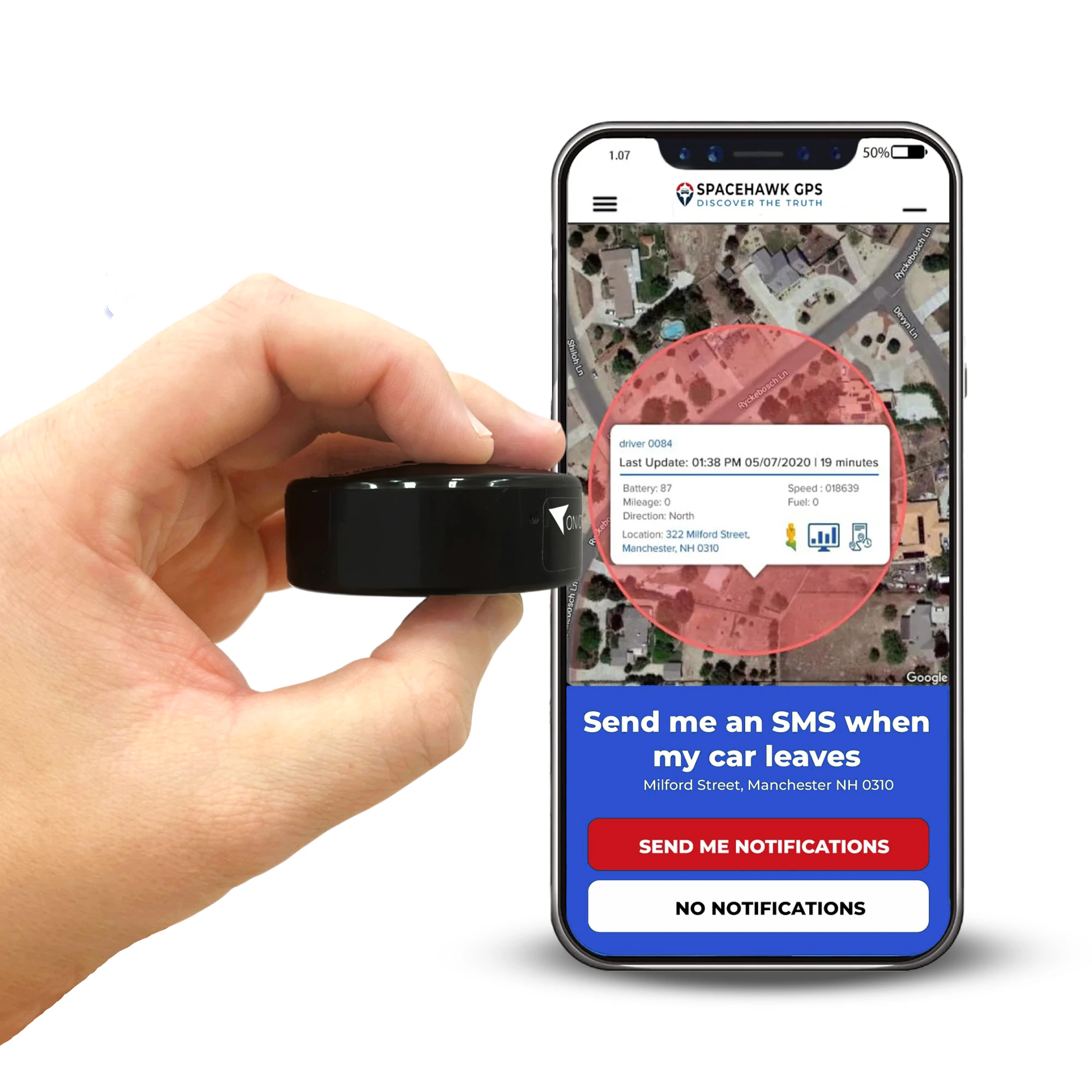
The SpaceHawk Hidden GPS Tracker is a compact, magnetic GPS tracking device designed for discreet, real-time location tracking on trailers, vehicles, and mobile assets. Spacehawk is ideal for owners who want fast alerts, precise location data, and an easy install without drawing attention to the tracker itself.
What earns SpaceHawk the #2 ranking is its speed and stealth. This hidden GPS tracker delivers some of the fastest real-time updates I tested, making it excellent for theft response and short-term monitoring. Compared to Tracki Pro and Track-4, SpaceHawk trades some battery longevity for a smaller, but more discreet design and faster updates. For users who value discretion and instant alerts above all else, SpaceHawk is hard to beat.
Key Features
- Real-time GPS updates from 3 seconds to 3 minutes, letting you balance fast alerts with battery savings.
- Ultra-strong magnetic mount with waterproof housing (IP67) for secure placement on trailer frames in all weather.
- Compact, silent design that’s easy to hide on trailers, frames, or toolboxes.
- Smart motion alerts and geofencing for immediate theft notification.
- Battery life of 1-3 weeks with active tracking, or up to 3-6 months in low-power mode.
- Global coverage in more than 150 countries for long-haul and cross-border tracking.
Pros
- Alerts arrive quickly when a trailer starts moving, giving you time to react.
- Simple installation with no wiring, tools, or setup headaches.
- Small size makes it discreet, while the magnet keeps it firmly in place.
- Location tracking stays accurate and consistent during daily use.
- Free lifetime technical support, so help is always available if you need it.
Cons
- The hardware alone won’t transmit location data without a data plan.
-
Battery life is shorter than Outlaw or PowerDrive when using the fastest update rates.

I mounted SpaceHawk on both utility and enclosed trailers, and its biggest strength showed up immediately with real-time speed. Installation took under a minute. I mounted it under the trailer frame using the built-in magnet, opened the app, scanned the QR, and tracking went live almost instantly. With updates set to the fastest mode, I could see trailer movement in near real time.
What I appreciated most was when a trailer moves, SpaceHawk tells you immediately any delay.
During simulated theft tests, SpaceHawk sent movement alerts fast enough to catch activity before the trailer cleared the lot. That is the difference between recovery and paperwork. For theft response, this tracker doesn’t hesitate.
Accuracy was solid as well. SpaceHawk held the signal better than most ultra-compact trackers. Compared to Tracki Pro or LandAirSea, it felt more aggressive about staying connected when movement started. Battery life is the trade-off. If you keep 3-second updates running, you’ll recharge more often than with Outlaw or PowerDrive. But that’s expected. SpaceHawk is built for fast alerts and discreet installs.
Go with the SpaceHawk Hidden GPS Tracker if fast alerts, easy installation, and discreet tracking matter more than maximum battery life.
#3. PowerDrive Magnetic GPS Tracker: Best for Speed & Battery Balance

The PowerDrive Magnetic GPS Tracker is a rugged, high-performance GPS tracker built for assets, vehicles, and trailers that need frequent updates without constant recharging. And Powerdrive is designed for users who want aggressive real-time tracking paired with a larger battery.
PowerDrive spots #3 because it delivers excellent speed and battery capacity, but it’s less optimized for long idle trailers than Outlaw and less discreet than SpaceHawk. Where it impresses is constant movement tracking and making it a strong choice for trailers, equipment or mixed fleets that move regularly rather than sitting for weeks.
Key Features
- Unlimited real-time GPS updates as fast as every few seconds, designed for constant movement tracking without capped pings.
- Large internal battery engineered to last significantly longer than ultra-mini trackers, reducing recharge frequency during active use.
- Waterproof, rugged housing built to withstand rain, dust, vibration, and harsh job-site environments.
- Strong magnetic mount that holds firmly on trailers and equipment, with optional stealth mode to disable indicator lights.
- Instant alerts for movement, speed, geofencing, and low battery, delivered reliably through the mobile app.
Pros
- Combines fast real-time update speeds with better battery life than most high-frequency GPS trackers.
- Built tough enough for equipment, trailers, and outdoor assets that see frequent movement.
- Alerts are reliable and consistent during daily use, even with repeated starts and stops.
- Easy setup with no wiring, tools, or professional installation required.
Cons
- Bulkier than SpaceHawk, making it harder to hide in ultra-discreet installations.
- Battery life, while strong, is still shorter than Outlaw when trailers sit idle for long periods.
- Higher upfront cost than entry-level trackers, which may be unnecessary for light-duty use.
PowerDrive is the tracker I reach for when I want speed without babysitting the battery. I used it on a flatbed trailer that moved almost daily. Setup was simple, magnet on and tracking live. What was fantastic right away was how consistently it delivered fast updates without draining itself the way smaller trackers often do. During movement tests, alerts came through quickly and reliably.
Not quite as instant as SpaceHawk, but close and noticeably more stable over longer runs. The larger battery makes a real difference if your trailer moves frequently instead of sitting idle.
Where PowerDrive fits best is active use. The housing held up well to rain, dust, and vibration, and the magnet stayed put through repeated drives. This tracker is a workhorse designed to keep reporting day after day, not only a “hide it and forget”.
#4. LandAirSea (No Monthly Fee Model): Best for Avoiding Ongoing Costs

The LandAirSea GPS Tracker with no monthly fee model fits buyers who want predictable costs and basic tracking without committing to an ongoing subscription upfront. LandAirSea delivers straightforward location visibility and simple alerts, making it a practical option for light-duty trailer tracking, vehicles, or assets. In real use, LandAirSea works best where cost control requires more than performance.
LandAirSea’s no-fee structure is appealing, but that trade-off shows up in slower alert speed and less efficient battery management compared to the top-ranked trackers. For occasional tracking and budget-focused needs, it does the job.
Key Features
- Real-time GPS tracking with standard updates every minute, with faster reporting available through upgraded plans.
- No recurring monthly subscription during the included service period, which lowers upfront commitment.
- Compact, waterproof housing designed for outdoor exposure, with a built-in magnetic mount for easy placement.
- Motion alerts and geofencing provide basic awareness when an asset or trailer moves.
- Global tracking coverage supported across multiple countries, backed by a lifetime warranty.
Pros
- No recurring monthly fees during the included service period, making it budget-friendly at the start.
- Easy to install and move between trailers, vehicles, or assets without tools or wiring.
- Waterproof and durable enough for outdoor use in normal weather conditions.
- Simple, beginner-friendly app that doesn’t overwhelm first-time GPS users.
- Lightweight and compact, making it easy to reposition as tracking needs change.
Cons
- Slower reporting frequency than higher-ranked trackers, especially on standard plans.
- Battery life and alert speed lag behind top performers designed for theft response.
- Faster update modes significantly reduce battery life, requiring more frequent charging.

LandAirSea is the tracker I usually recommend when someone’s first question is, “Do I really have to pay a monthly fee?” And this is what I liked most was straightforward and predictable without any surprises or complexity, just tracking at a controlled cost.
I used LandAirSea on a small utility trailer that moved occasionally but spent most of its time parked. Setup was straightforward. The magnetic mount made installation easy, and the app connected without much friction. Within minutes, I could see location data and movement alerts. In real-world use, LandAirSea was dependable. Alerts arrived consistently. When the trailer moved, I got notified, but with enough delay that it felt more like confirmation than prevention.
Battery performance was reasonable, especially when motion-based sleep was enabled. But once I increased reporting frequency, battery life dropped quickly, which limits its usefulness for active theft response. Where LandAirSea makes sense is cost structure. Compared to the top three trackers, it’s simpler, cheaper upfront, and easier for people who don’t want to commit to ongoing subscriptions right away.
#5 Tracki Pro GPS Tracker: Best for Versatility & Worldwide Coverage

The Tracki Pro GPS Tracker is a flexible, all-purpose tracking device built for users who need broad compatibility rather than trailer-specific optimization. Tracki Pro works best for users who value global tracking, multiple alert types, and mounting flexibility across different assets.
Tracki Pro’s strength lies in adaptability, you can move it easily between vehicles, equipment, or trailers and configure alerts to fit a wide range of use cases.
Where Tracki Pro falls behind higher-ranked options is trailer-specific performance. In long idle trailer scenarios, alert timing and battery behavior are less predictable than trackers designed specifically for trailer GPS tracking. For general asset tracking it performs well and for dedicated trailer theft prevention, more purpose-built trackers deliver more consistent results.
Key Features
- Real-time GPS tracking with smart alert customization, allowing users to tailor notifications for movement, speed, geofence breaches, and battery status.
- Long battery life supported by multiple power-saving modes, helping extend runtime during idle or low-activity periods.
- Waterproof, rugged design built to handle outdoor use, with multiple mounting options for flexible placement across vehicles and assets.
- Broad network support including GPS, LTE, Wi-Fi, and multiple satellite systems for reliable tracking in varied environments.
- Worldwide coverage across 180+ countries, making it suitable for international travel and cross-border asset tracking.
Pros
- Extremely flexible tracking options with strong global compatibility across networks and regions.
- Solid battery life when configured for low-power or interval-based tracking.
- Multiple alert delivery methods, including app notifications, email, and SMS.
- Easy to move between different assets, vehicles, or trailers as needs change.
Cons
- Not optimized specifically for fast trailer theft response or recovery scenarios.
- The platform can feel complex for users who only want simple trailer tracking.
- Alert timing is reliable but slower than top-ranked trackers focused on real-time theft interception.
- Live tracking, alerts, and realtime location updates require an active subscription.

Tracki Pro is the tracker I usually test when someone wants one device that can do a bit of everything. I used Tracki Pro on a utility trailer and later moved it to a vehicle to see how it handled switching roles. Setup was easy, and the included mounting options made it flexible to install. Once live, tracking was accurate and consistent, especially in open areas and mixed environments.
Tracki Pro supports multiple networks and alert types, which makes it useful if you’re tracking different assets in different conditions. That said, alert timing wasn’t as aggressive as SpaceHawk or Outlaw. Movement notifications arrived reliably, but not always fast enough. Battery life was solid when using power-saving modes. For long idle periods, it performed better than expected.
Compared to Trak-4, it’s faster and more interactive. But it doesn’t match the trailer-first focus or alert urgency of the top three, which is why it lands at #5. What I liked most, Tracki Pro adapts well. If you need one tracker to move between assets, it handles that role smoothly.
#6 Trak-4 GPS Tracker: Best for Long-Term Idle Tracking

The Trak-4 GPS Tracker is built for long-term asset and trailer monitoring where battery life and low maintenance counts more than instant alerts. Track-4 is a strong fit for trailers, containers, and equipment that stay parked for long stretches and don’t require second-by-second tracking. Trak-4 makes sense in scenarios where you want reliable tracking without frequent charging or daily oversight.
Track-4’s extended battery life and simple reporting model make it ideal for inventory-style tracking, storage yards, and assets that move infrequently but still need visibility.
Compared to Outlaw or SpaceHawk, it responds more slowly to sudden movement and delivers less aggressive alert timing. That trade-off makes sense for long-idle assets, but for active trailer theft prevention, faster-alert trackers provide more immediate protection.
Key Features
- Battery life lasts up to 12–18 months per charge, making it ideal for trailers and assets that sit idle for long periods.
- Waterproof, durable housing designed for long-term outdoor exposure in rain, dust, and varying temperatures.
- GPS tracking combined with Wi-Fi location fallback, helping maintain visibility when GPS signals are weak or unavailable indoors.
- Flexible mounting options including screw mounts, adhesive options, and an optional high-strength magnetic kit.
- Lifetime warranty backed by responsive customer support for setup and ongoing use.
Pros
- Exceptional battery life that minimizes maintenance and charging downtime.
- Reliable, consistent tracking for idle trailers, equipment, and inventory assets.
- Affordable subscription options make it practical for tracking multiple assets at scale.
- Solid choice for inventory-style or compliance tracking where constant updates aren’t required.
- Low-touch operation once installed, with minimal need for user interaction.
Cons
- Slower alert and reporting frequency limits usefulness for real-time theft response.
- Larger physical size reduces concealment options compared to compact trackers.
- Not well suited for assets that move frequently or require second-by-second updates.
- More focused on periodic check-ins than active movement monitoring.

Trak-4 is the tracker I turn to when the priority is long-term visibility, so I put Trak-4 on a parked utility trailer that stayed idle for weeks at a time. Setup was simple, and once mounted, it required very little attention. The battery life was impressive. With conservative reporting settings, Trak-4 kept checking in for months without needing a recharge.
Tracking itself was reliable, but clearly designed for interval reporting rather than rapid alerts. When the trailer moved, the system logged it and reported as expected. This is not a “drop everything and chase it now” tracker.
Where Trak-4 feels more reasonable is low maintenance. For trailers that rarely move, or for inventory-style tracking where you just need to know location over time, it does its job quietly and consistently. Compared to SpaceHawk and LandAirSea it is slower but lasts far longer. That trade-off is why Trak-4 sits at the lower of the list.
#7. Solar Powered GPS Tracker: Best for Outdoor, Maintenance-Free Tracking

The Solar Powered GPS Tracker is a large-capacity, solar-assisted tracking device designed for outdoor assets that need continuous monitoring without manual charging. Solar charging is convenient but the device is larger and less discreet, and performance depends on sunlight exposure. Compared to battery-powered trackers, it’s more specialized than universal.
Fleet1st Solar GPS tracker combines a large internal battery with a built-in solar panel, making it well suited for trailers, equipment, containers, and assets stored in open environments for long periods.
With regular sunlight exposure, it can maintain operation for months while still delivering movement alerts, geofencing, and consistent location reporting. For outdoor yards, remote sites, or long-term deployments, that convenience is its biggest advantage. Compared to compact trackers like Outlaw or SpaceHawk, it’s more specialized than universal.
Key Features
- Built-in solar panel paired with a 10,000 mAh internal battery, designed to extend runtime and reduce the need for manual charging.
- Real-time location updates as fast as every 10 seconds, offering near–real-time visibility for moving assets.
- IP67 waterproof and dustproof construction built to handle rain, dirt, and continuous outdoor exposure.
- Movement alerts, geofencing, and speed notifications to monitor unauthorized use or unexpected movement.
- Global tracking coverage across 155+ countries, suitable for fleets and assets that travel internationally.
- Lifetime warranty backed by subscription-based service and responsive customer support.
Pros
- Minimal maintenance thanks to solar-assisted charging, especially for outdoor assets.
- Excellent option for long-term outdoor deployments where charging access is limited.
- Strong weather resistance that performs reliably in harsh environments.
- Useful historical playback and monitoring tools for reviewing past movements.
- A large internal battery provides backup power during cloudy days or limited sunlight.
- Reduces downtime caused by dead batteries compared to standard portable GPS trackers.
Cons
- Requires consistent sunlight exposure for optimal performance, limiting indoor or shaded use.
- Larger size makes it harder to conceal compared to compact magnetic trackers.
- Slower alert response than top-ranked trackers built specifically for theft interception.
- Overkill for users who can easily recharge battery-powered GPS devices.

This is the tracker I recommend when the biggest concern is charging access but not for the stealth or size.
I installed the solar-powered GPS on an outdoor trailer and equipment parked in an open yard for extended periods. Installation was straightforward, mount it where it can see sunlight, activate it, and let it run. Once in place, it stayed online without me having to touch it again, which is the whole point of a solar tracker.
Tracking performance was steady. Location updates arrived consistently, and movement alerts worked as expected, though not as aggressively as SpaceHawk, Outlaw or PowerDrive.
This tracker isn’t about instant theft interception; it’s about ongoing visibility without maintenance. Where it really earns its place is battery management. The built-in solar panel kept the 10000 mAh internal battery topped off during daylight exposure, even after weeks outside. That makes it ideal for trailers, containers, or equipment stored outdoors where plugging in a charger just isn’t practical.
Buyer’s Guide: How to Choose the Best GPS Tracker for Your Trailer
The best GPS tracker for your trailer is one that wakes up instantly when the trailer moves, lasts through long idle periods without dying, and alerts you fast enough to act before the trailer is gone. Before getting into brands and features, here are the few things that actually need to consider when choosing a trailer GPS tracker:
- Alert speed
- Battery behavior
- Mounting & durability
- Reporting reliability
- Platform quality
 If a tracker fails at even one of these, it usually fails when it is needed most. But here’s where most people get tripped up. They think trailer tracking is the same as vehicle tracking.
That changes everything, from battery life and reporting frequency to where the tracker can be mounted and how fast it needs to respond. And if you and I were standing next to your trailer right now, this is exactly how I’d walk you through choosing the Best GPS Tracker for a Trailer:
1. Start With How Your Trailer Is Actually Used
This is the most important step, and it’s the one most people skip. Before you look at brands, prices, or feature lists, you need to understand how your trailer actually lives day to day. Trailer GPS trackers don’t fail because they’re “bad”, they fail because they’re mismatched to real use.
Trailers sit parked for weeks or others move every day and some live outdoors year-round. Those differences directly affect battery life, alert timing, and reliability. So start here and be honest and ask yourself one simple question: Does my trailer move daily, occasionally, or almost never?
Now here’s how that answer should guide your choice.
- If it sits idle for days or weeks: You need long battery life and reliable wake-up alerts. This is where trailer-specific trackers like Outlaw or long-life options like Powerdrive make sense.
- If moves frequently or unpredictably: Faster update rates matter more than extreme battery life. Trackers like SpaceHawk or PowerDrive work here.
- I stored outdoors long-term: Solar-powered trackers can work well, as long as the trailer gets consistent sunlight.
If you choose a GPS tracker that doesn’t match how your trailer is actually used, it will frustrate you even if the specs look impressive on paper.
2. Alert Speed

Alert speed is simply how fast a GPS tracker notices movement and tells you about it. Not when the trailer is already gone, but the moment it starts moving. Speed is a more important thing to consider because trailer theft doesn’t happen slowly. A trailer can be hooked up and rolling in under two minutes. In real trailer tracking, fast alerts are what give you leverage.
You want the tracker to wake up immediately after idle periods, detect movement right away, and push an alert to your phone without waiting for the next scheduled update. When those pieces work together, you’re reacting while the trailer is still nearby, not hours later with a map history.
When you’re choosing a tracker, don’t just look at how often it reports location. Pay attention to how quickly it reacts when something changes. That response time is what actually protects your trailer.
3. Battery Life
For a trailer GPS tracker, battery life means how long the tracker can stay reliable while your trailer sits unattended and still wakes up instantly when it moves.

You’ll see claims like “5-year battery” or “months of runtime,” but those numbers almost always assume the tracker is barely doing anything. In real trailer tracking, battery life depends on how often the tracker wakes up, how fast it reports, and how long the trailer sits idle. Here’s what actually needs to know when you look past the marketing:
- Long battery life usually assumes slow reporting, sometimes just one or two check-ins per day.
- Faster updates drain batteries quicker, especially trackers that report every few seconds.
- Motion-based sleep modes are more important than raw battery size, because they conserve power when a trailer isn’t moving.
Every rechargeable tracker makes a trade-off between speed and endurance. The right choice comes down to how often your trailer actually moves and how quickly you want to be alerted when it does. But if your trailer sits idle most of the time, prioritize smart power management that wakes instantly when movement starts. And if your trailer moves frequently, prioritize larger batteries and convenient recharging over extreme idle longevity.
4. Installation & Mountings
For a trailer GPS tracker, good installation means you mount it once and never have to think about it again. If installing or adjusting the tracker feels complicated, most people stop checking it or stop using it altogether.

Trailers deal with vibration, weather, road grime, and long highway miles. If a tracker can’t stay securely mounted through all of that, it becomes a liability instead of protection. In real-world use, a simple, solid install does more for reliability than any clever mounting ideas. When choosing a trailer GPS tracker, look for setups that:
- Secure firmly using screws or a strong magnetic mount or fixed hardware designed for metal trailer frames
- Stay locked in place through rain, dust, vibration, and highway speeds
In my experience, the best trackers are the ones you forget about after installation because they just stay put and keep working. If a tracker needs frequent adjustment or special attention, it’s not doing its job.
5. Durability, Ruggedness & Waterproofing
Durability and ruggedness describe a GPS tracker’s ability to keep working under constant physical stress. Trailers don’t get treated gently, and neither should your GPS tracker. Durability isn’t a “nice to have” in trailer tracking.
A trailer GPS tracker needs to survive rain, road grime, dust, vibration, heat, and cold without losing signal, shifting position, or failing internally. If the housing cracks, the seal fails, or the mount loosens, tracking reliability disappears fast. When you’re choosing a tracker for trailers, pay attention to:
- Waterproof ratings (IP67 or better): This ensures the tracker can handle rain, mud, and washdowns without issue.
- Rugged housing: Thin plastic shells crack or flex over time. Solid, sealed casings last.
- Mount stability under vibration: A strong magnetic or fixed mount must hold through highway speeds and rough roads.
- Outdoor readiness: Trackers designed for vehicles don’t always survive long-term outdoor exposure on trailers.
 If your trailer lives outside and most do, durability directly affects tracking reliability. In trailer tracking, toughness is about making sure the tracker keeps working long after you’ve forgotten it’s there.
6. A Simple, Reliable App Or Dashboard
A trailer GPS tracker is only half the system. The app or dashboard you use every day is the other half and it’s the part you’ll interact with when something actually goes wrong.
A good platform delivers alerts when they’re supposed to arrive, shows you real-time location without lag, and lets you check battery status or location history without digging through menus. When the interface is clean, you react faster. When it’s cluttered or slow, you hesitate and hesitation costs time.
I’ve tested trackers with solid hardware that still failed in real use because the platform lagged, glitched, or delayed alerts. In those moments, if the software stumbles, the entire system stumbles with it. When you’re choosing a trailer GPS tracker, don’t just look at the device. Spend time on the app. If it’s confusing, slow, or unreliable, you’ll feel that frustration the first time you actually need it.
7. Subscription Or GPS Data Plans
A trailer GPS tracker doesn’t work on its own. After the hardware cost, cellular-based GPS tracking requires a data plan so the tracker can send location updates, movement alerts, and history to your phone or dashboard. Think of it like a phone plan for your tracker.
 The device uses cellular networks to transmit data, and the subscription covers that connectivity, along with access to the tracking platform and alert system. A good GPS data plan delivers fast alerts, stable app performance, and consistent reporting. A poor one leads to delayed notifications, missing updates, or unreliable access when you actually need it.
When you’re comparing GPS data plans, focus on:
- Alert responsiveness: Movement and geofence alerts should arrive immediately, not minutes later.
- Platform reliability: The app or dashboard should stay fast, stable, and easy to use day after day.
- Plan flexibility: Month-to-month options and easy cancellation are signs of a service that stands behind its product.
- Overall value: A reasonable monthly fee makes sense if it delivers dependable real-time tracking and peace of mind.
A low-cost tracker with a weak data plan ends up costing more in the long run. One reliable alert at the right moment is worth far more than saving a few dollars on a subscription that fails when it counts.
Want to avoid ongoing subscriptions? Read our full guide on the best no monthly fee GPS trackers for real-time accuracy.
Final Advice: Choosing the Right Trailer GPS Tracker for Your Situation
From years of testing, I can say this confidently: the best trailer GPS tracker is the one that matches how your trailer is actually used. Idle trailers need smart battery management and instant wake-up alerts. Frequently moving trailers need fast reporting. And outdoor trailers need durability that doesn’t quit. Get that match right, and tracking becomes simple and reliable.

When hardware, alerts, battery behavior, and the platform all align with real-world use, GPS tracking stops feeling like a chore and quietly does its job in the background.
And if you’re wondering whether a GPS tracker is worth it, ask yourself this: “Would you rather pay a few dollars a month to know where your trailer is… or spend a weekend explaining to your crew why it isn’t?”
Exactly.
Once you’ve chosen the right tracker, the next step is proper installation. Our expert DIY guide shows you exactly how to install a GPS tracker in the right way.
Conclusion
After testing and comparing trailer GPS trackers in real-world conditions, the takeaway is simple: there isn’t one “best” tracker for everyone, the best trailer tracker depends on how your trailer is used.
For most trailer owners and fleet managers, Outlaw Trailer GPS Tracker earns the best overall choice. Outlaw delivers the right balance of fast alerts, long battery life, and durability for trailers that sit idle but still need instant theft awareness. If you want dependable trailer-specific tracking without babysitting the device, this is the one I’d recommend first.
If your trailer moves frequently or unpredictably and you care more about speed than extreme battery life, SpaceHawk makes sense as a high-performance option. And if you’re managing assets that move often, PowerDrive earns its place with fast reporting and rugged build quality. For low-maintenance deployments and inventory-style monitoring, options like Trak-4 and Solar Powered GPS fill more specialized roles, depending on environment and usage.
The next step is simple, just match the tracker to your trailer’s real-world use. Choose the option that fits how often your trailer moves, where it lives, and how quickly you need alerts. Pick the tracker that aligns with your situation now, because the best time to start tracking a trailer is before you need to recover it.
Author Disclosure
Written by Ryan Horban, GPS tracking specialist with 15+ years of hands-on testing experience.
For more than a decade, I’ve worked directly with GPS tracking systems used on trailers, non-powered assets, construction equipment, and mixed fleets. My testing spans battery-powered, hardwired, magnetic, and solar GPS trackers deployed on trailers that sit idle for weeks, move unpredictably, or operate outdoors in rough conditions.
I focus on how trailer GPS trackers perform when it actually counts like alert speed, battery behavior after long idle periods, mounting reliability, durability, and platform stability. Every recommendation in this guide comes from real-world use, so you can choose a trailer GPS tracking solution that delivers reliable location data and timely alerts when something goes wrong.
👉 Connect with me on LinkedIn →

FAQs: Trailer GPS Tracking Explained
Do GPS trackers work on trailers without power?
Yes, GPS trackers work very well on trailers without power, as long as they’re designed for it. Most trailer GPS tracking relies on battery-powered asset trackers rather than vehicle wiring. The key is choosing a tracker built for long idle periods with reliable wake-up behavior.
In real use, trailer-specific trackers handle non-powered assets far better than standard vehicle trackers because they’re engineered to stay dormant efficiently and respond instantly when movement starts.
How long do GPS tracker batteries really last on trailers?
Battery life depends far more on usage than on advertised claims. Terms like 5year battery life or 5year battery usually assume minimal reporting and long idle periods. In real-world trailer tracking, battery performance depends on how the tracker behaves day to day.
What actually determines battery life:
- Reporting frequency: Faster updates provide better visibility but drain power more quickly.
- Motion-activated sleep modes: Smart trackers conserve battery while idle and wake instantly when movement begins.
- Battery size and efficiency: Larger batteries help, but efficiency often makes the real difference.
For idle-heavy trailers, smart power management delivers better results than raw battery capacity alone. For active trailers, expect shorter runtimes in exchange for stronger realtime location awareness.
Yes, but only if the tracker delivers fast alerts and reliable tracking.
Trailer theft happens quickly, and slow updates erase your advantage. A capable gps trailer tracker sends movement alerts immediately and provides realtime location updates frequently enough to act while recovery is still realistic. Trackers that report too slowly often just document the loss instead of helping stop it.
What really makes the difference is timing. When the alert arrives while the trailer is still nearby, you have options and verify the movement, contact authorities, or take action before the trailer disappears. When the alert arrives late, all you’re left with is a map history and a problem that’s already grown larger.The fast alert speed and reliable tracking are the entire point.
How accurate is trailer GPS tracking in real-world use?
Modern trailer GPS tracking is highly accurate when cellular coverage is available. Most quality asset trackers report realtime location within a few feet using GPS combined with cellular data. In open areas, accuracy is excellent. In dense urban zones or enclosed yards, reporting can slow slightly, but well-designed trackers maintain reliable tracking and usable location history.
Do trailer GPS trackers work for equipment tracking and global use?
Yes, many trailer GPS trackers also perform well for equipment tracking and global tracking. These devices often protect generators, containers, and other non-powered assets just as effectively as trailers, especially when built for outdoor use.
When evaluating trackers for broader use, look for:
- True global cellular support: Coverage across regions is more important than satellite access alone.
- Consistent reporting behavior across countries: Reliable tracking shouldn’t change when assets cross borders.
- Durable hardware for outdoor deployment: Equipment tracking often means long exposure to weather and vibration.
- Stable platforms that scale: Managing multiple assets requires a dashboard that stays responsive.
- Reliable tracking over long idle periods: Equipment and trailers often sit unused for weeks at a time.
This flexibility makes trailer GPS trackers valuable beyond just trailers, especially for mixed fleets and distributed assets.
 Buy on Amazon