
Where Do Cops Put Tracking Devices On Cars?
Key Takeaways
-
01 Magnetic GPS trackers attach under vehicles for hidden tracking without driver awareness.
-
02 Wheel wells and bumpers provide concealed exterior spots that are difficult to inspect.
-
03 Interior hiding spots include dashboards seats glove boxes and trunk compartments.
-
04 Hardwired GPS devices connect to vehicle power systems for long term surveillance.
-
05 Real time GPS tracking records routes stops and driving behavior continuously.
-
06 Vehicle inspections help detect hidden trackers before they collect long term data.
Where Do Police Put Tracking Devices On Cars – How Cops Secretly Track You!
Do you believe law enforcement are unlawfully keeping tabs on you? Yikes! But where do police put tracking devices on cars? A mini GPS tracker can record your every move—without you even knowing it’s there! That’s why it’s important to know exactly where these devices might be hidden on your vehicle. Why? Because hidden GPS devices can monitor every single place you go. That is some real 1984 vibes.
At Fleet1st, we’re here to break down everything you need to know about police tracking methods—no fluff, no jargon, just the facts.
Here’s what you’ll learn in this guide:
- 10 common hiding spots: Discover where police typically place GPS trackers on vehicles to avoid detection.
- How police use GPS trackers: Get a step-by-step overview of how law enforcement conducts vehicle surveillance.
- Removal tips: Learn how to inspect your car for hidden trackers and what to do if you find one.
Let’s dive into the article and explore where police place GPS tracking devices on vehicles and how you can protect your privacy!

Track Your Vehicle Before Someone Else Does
Attaches under any vehicle in seconds. Real-time location every 3 seconds and fully legal on any vehicle you own.
- ✓Legal owner tracking
- ✓3-second live updates
- ✓Covert magnetic mount
- ✓Waterproof & durable design
- ✓150+ countries coverage
- ✓~6 feet location accuracy
 Buy on Amazon
Where Do Police Put Tracking Devices On Cars -10 Common Spots
When law enforcement uses GPS they call upon a variety of techniques and equipment to gather evidence. One common method is the use of hidden GPS devices, which allow police to track vehicles discreetly and without the knowledge of the vehicle owner. These GPS units can be attached to various locations on a car, providing law enforcement with valuable information about the target’s whereabouts. Here are 10 places where police hide GPS tracking devices on cars:

Mounts low and out of sight, shielded from impact, and keeps reporting continuously without touching any of the vehicle's wiring.
Tucked behind the liner, sealed from weather and casual sightlines, while still holding a clean GPS signal.
Quick for you to reach for a battery swap, and low-profile enough that it won't catch attention during a rushed getaway.
Simple to install and maintain yourself, fully protected from weather — a solid pick for everyday monitoring of your own car.
Close enough to a power source to hardwire, and mounts securely out of view from the driver's seat.
Settled near the spare-tire well or trim panel, concealed from a glance while still tracking movement accurately.
Set behind a door or dash panel, reaching it takes real disassembly — exactly what makes it hard to locate and pull in a hurry.
A heat- and vibration-rated unit near the firewall sits in the one place most quick searches skip entirely.
Fast for you to install or remove, well suited to day-to-day monitoring, though less secure against a thorough cabin search.
Built into the existing assembly, so it blends into a part of the car nobody thinks to inspect after a theft.
Before you start a visual inspection, the fastest way to confirm whether an active GPS tracker is present is with a dedicated RF signal detector. These handheld devices scan for the cellular and GPS frequencies that real-time trackers transmit, alerting you to active signals that are completely invisible to the naked eye. A visual inspection only finds what you can see. An RF detector finds what's transmitting.

Scan Before You Search: GPS Tracker Detector
A handheld RF signal detector sweeps your vehicle for active GPS and cellular transmissions in under 60 seconds before you spend time crawling under the car. If a tracker is actively transmitting, this device finds it. Covers 1MHz-6.5GHz, which includes every frequency used by real-time GPS trackers on the market.
- ✓Military-grade RF detection - 1MHz to 6.5GHz coverage
- ✓4 detection modes: GPS trackers, hidden cameras, microphones, and RF devices
- ✓Silent vibration alert and scan discreetly without tipping anyone off
- ✓25-hour battery life on a single charge
- ✓Pocket-sized just 30 grams, fits anywhere
#1 GPS Device Used By Sheriffs Departments

- One of the most accurate devices to track any car
- Find out where anyone is going 24/7
- Fleet tracking from your iPhone or Android device
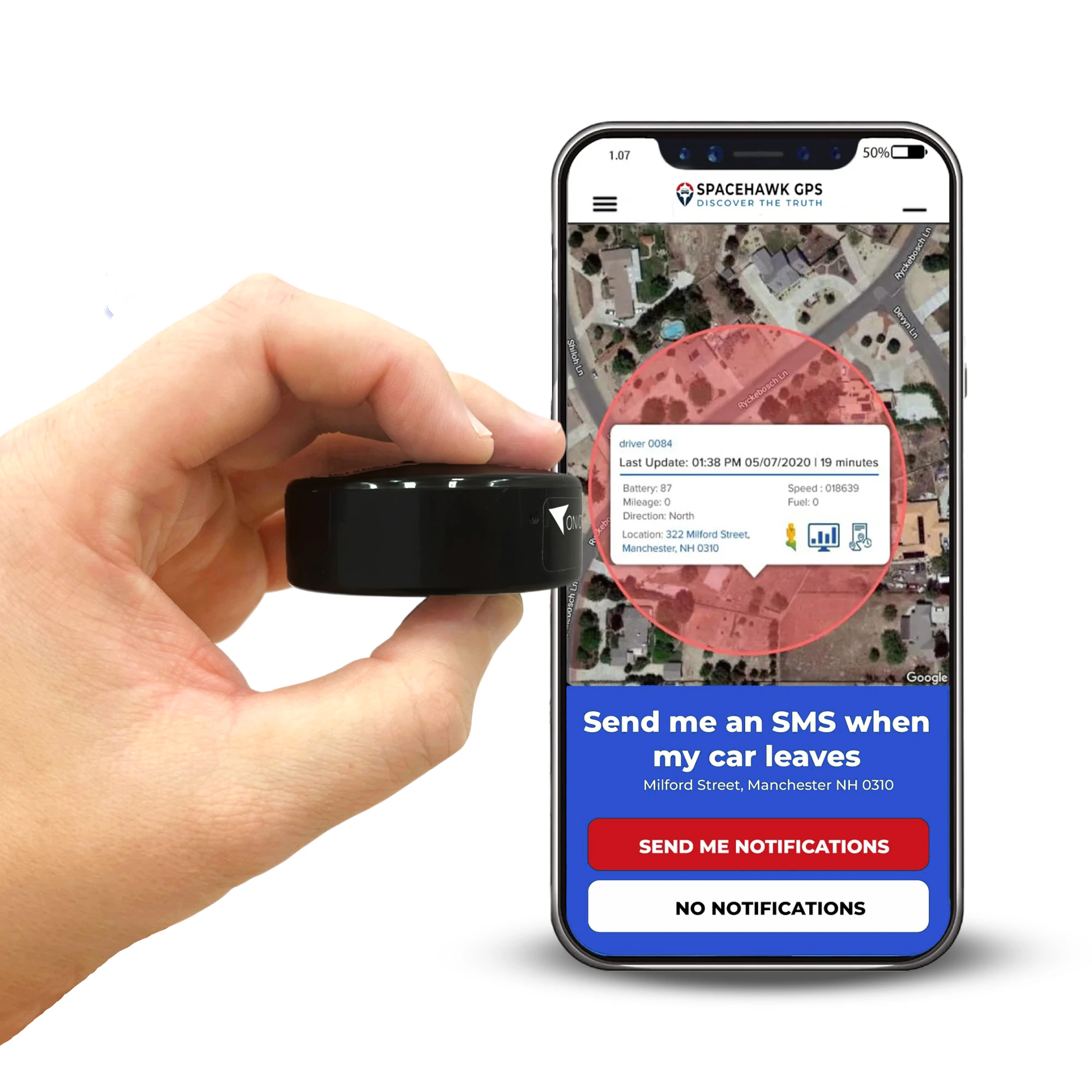
SpaceHawk is the first GPS car tracker designed to help sheriff’s officers safely track any vehicle. Utilizing global positioning technology, this magnetic GPS is an absolute powerhouse! But what makes it better than other monitoring devices such as SpyTec GL300 or Tracki? The answer is the small size, strong magnetic mount, and 3-second refresh rates. Yes, that makes SpaceHawk the law enforcement GPS with the fastest updates on the market!

How Do Police Track Cars: A Step-By-Step Guide
Commonly associated with business fleet management, GPS trackers are increasingly popular among police agencies for surveillance. The benefits of these covert GPS trackers are manifold. One of the primary advantages is that they enable 24/7 surveillance without exposing uniformed officers to potential risks. By placing a hidden GPS tracker on a target vehicle, law enforcement can rely on the spy gear to meticulously record various driving activities in real-time. This approach eliminates the need for costly overtime and minimizes the dangers faced by officers, while generating valuable data that can be utilized in a court of law. Here is a breakdown of the entire 11-step process of how police secretly track vehicles:
- Police obtain a warrant based on reasonable suspicion of criminal activity involving a specific vehicle.
- Officers place a GPS locator on the target vehicle without the owner’s knowledge or consent.
- The GPS device on your car is typically small, waterproof, and designed with a magnetic surface for easy attachment.
- The car GPS tracker is discreetly placed on the exterior or underside of the vehicle to avoid detection.
- Once activated, the GPS tracker starts recording the vehicle’s location, speed, and other relevant data.
- The device sends real-time location updates to a secure server, allowing officers to track the vehicle remotely.
- Law enforcement can monitor the vehicle’s movements and activities from a safe distance using computer systems.
- The collected data provides detailed information about the vehicle’s routes, stops, and duration of travel.
- Police analyze the gathered information to establish patterns, identify potential criminal behavior, and build a case.
- If the GPS tracking operation extends beyond the authorized period, officers may need to seek a warrant extension or remove the tracker.
- The evidence gathered through GPS tracking may be used in court to support criminal charges or investigations.

Discover And Remove Police GPS
Removing a GPS tracker from your vehicle isn’t something to take lightly, so it’s best to consult with a legal expert or local authorities before doing anything. While we can share some general tips, keep in mind that removal methods depend on the type of tracker and where it’s installed. Below, we’ll walk you through where cops put tracking devices on cars and what to do if you find one.
- Underneath a truck or vehicle (attached with a magnet): To remove a tracker attached underneath your vehicle with a magnet, you should carefully inspect the area. Use a flashlight to locate the tracker and identify any wires connected to it. Gently detach the magnet from the vehicle, ensuring no damage to the tracker in the process.
- Inside the vehicle glovebox: Open the glovebox, identify the tracker, disconnect connections, and remove it cautiously.
- Installed to the 12-volt system: If a GPS tracker is installed on the 12-volt system of your vehicle, it may require professional assistance for safe removal. Tampering with the electrical system without proper knowledge can lead to damage. Consult an experienced automotive technician or a trusted professional who specializes in GPS tracker removal to ensure a proper and safe removal process.
- Under a seat: Lift the seat, disconnect any wires, and remove the tracker without damaging upholstery or components.
- Plugged into the OBD2 port: Locate the port, unplug the device, and detach any additional fasteners if present.
Once you've scanned for active signals, a physical inspection confirms what the detector found. For under-car and wheel well checks, two tools make the job significantly easier:

Telescoping LED Lighted Inspection Mirror
Telescoping inspection mirror, extends to reach wheel wells, bumper corners, and undercarriage without crawling under the vehicle.

Streamlight 88061 Pro Professional Tactical Light
Pairing a bright flashlight with a telescoping inspection mirror gives you full visibility under the vehicle without lying on the ground, most trackers are found in the first five minutes with both tools.
Conclusion
Police now routinely employ the use of hidden GPS trackers. These devices capture every stop, address, and route in detail, giving officers solid evidence without being on-site.
With GPS technology, law enforcement can follow a suspect’s movements quietly and efficiently, making it less likely to get noticed. It’s a game-changer that helps police build stronger cases while freeing up time and resources for other tasks. In the end, GPS tracking is about smarter crime prevention and more effective policing.”

SpaceHawk Mini GPS Tracker | Hidden Magnetic Vehicle Tracking
SpaceHawk uses the same compact magnetic design used by private investigators and fleet managers worldwide. Attaches under any vehicle in seconds. Real-time location updates every 3 seconds. Completely hidden once placed. Works globally in 150+ countries.
- ✓Real-time GPS updates every 3 seconds & 6-foot accuracy
- ✓Strong magnetic mount, holds through highway speeds and rough roads
- ✓IP67 waterproof that survives rain, mud, and road spray
- ✓Battery life 2-3 weeks on frequent updates & 3-6 months on low-power mode
- ✓Works in 150+ countries with included global SIM