


Best Golf Cart GPS Tracker: Buying Guide 2026 | Tested by Fleet Expert
Hey there, if you've Googled "best gps tracker for golf cart" tonight, I'm guessing one of two things just happened. Either your golf cart went missing, or you're tired of wondering where it ends up every time someone else drives it. Either way, you're in the right place.
I'm Ryan Horban. I've spent 15+ years testing GPS hardware across construction sites, rental fleets, and real-world equipment operations, golf carts included.
Golf cart theft is on the rise at courses and in golf-cart communities where carts get left unsecured overnight, and replacing a stolen cart isn't cheap. So before I recommend anything, let me show you how I tested these and why each one made this list. I put five trackers through real golf-cart conditions like open fairways, tree-covered cart paths, locked storage barns, and a few overnight "let's see if anyone notices" tests I won't pretend my neighbors loved.
Below is a quick comparison table you can scan in ten seconds, followed by the full breakdown of each tracker, install tips, and a buyer's guide for picking the right one.

Recommended for this guide
Know Where Your Cart Is. Every 3 Seconds.
A magnetic mini GPS tracker that hides inside any golf cart and reports real-time location, geofence alerts, and unauthorized movement, active in under 2 minutes with no wiring needed.
See the Best Golf Cart Portable GPS Tracker Review
Which Golf Cart GPS Tracker Is Best? Quick Comparison
Short on time? Here's how the five trackers I tested stack up side by side. I'll walk through the full reasoning, and where each one actually shines or falls short, right after.
|
SpaceHawk Mini
|
 Spytec Atlas Spytec Atlas
|
 LandAirSea 54 LandAirSea 54
|
 Optimus 3.0 Optimus 3.0
|
 Tracki Pro Tracki Pro
|
|
|---|---|---|---|---|---|
| Best For | Maximum stealth + fastest live updates | Detailed trip history + flexible sizing | Budget-conscious, reliable outdoor use | Easy geofencing for course/fleet managers | Long battery + seasonal/outdoor storage |
| Battery (Active) | 18-24 days (up to 6 mo. low-power) | 9-14 days (speed-dependent) | 1-3 weeks (3+ mo. energy-save) | Up to 1-2 months (default setting) | Up to 60 days (200+ in battery-save) |
| Waterproof | Yes | IP67 (case) | IP67 | Yes | IP67 |
| Cost | ~$29.95-59 | ~$19.95 | ~$14.95 | ~$16.95 | ~$29.88 |
| Where to Buy | Buy on Amazon | Buy on Amazon | Buy on Amazon | Buy on Amazon | Buy on Amazon |
How I Tested Every Golf Cart GPS Tracker on This List

I didn't just read spec sheets for this one. I mounted each tracker on a cart, drove it around, parked it under trees, left it in a metal storage shed, and waited to see what broke first. Here's what I actually weighed:
With that out of the way, let's get into the trackers themselves, starting with the one I'd put on my own cart.
Disclaimer:
This guide reflects hands-on testing alongside publicly available specifications from each manufacturer. Some products featured in our guides may also be available through Amazon and other retail partners. If you purchase through certain links, we may earn a small commission at no additional cost to you. That said, affiliate relationships never influence our rankings, recommendations, testing process, or product selections.
We evaluate products based on real-world performance, features, reliability, and overall value, regardless of whether we earn a commission from a purchase.
1. SpaceHawk Mini: Best for Hiding a Tracker Without Anyone Knowing
The SpaceHawk Mini is a compact, magnetic GPS tracker built for stealth. SpaceHawk Golf Cart Tracker is the one I keep coming back to for golf carts specifically, because most carts have nowhere obvious to hardwire a device, and most owners don't want one anyway.
Compared to the Spytec Atlas, Optimus and Tracki, SpaceHawk wins on raw speed: its fastest refresh rate updates every 3 seconds, noticeably quicker than anything else on this list. That helps more than it sounds like it should, because when a cart goes missing, the difference between a 3-second ping and a 5-minute one is the difference between catching it near the property and catching it three towns over.
Here's what I really loved in testing about the SpaceHawk mini GPS:
- Magnetic mounting, with no wiring and no drilling
- Built-in SIM card, ready to activate out of the box
- Refresh rates as fast as every 3 seconds
- Rated for -40°F to 140°F, so weather isn't a concern
- GPS accuracy within 6 feet in my testing
- Free tech support, mobile and desktop apps included
- Fastest update speed in this lineup
- Setup takes about 2-3 minutes, even for first-timers
- Battery runs 18-24 days active, up to 6 months in low-power mode
- Works in 150+ countries if your cart ever leaves the property
- Subscription required, starting around $19.95/month
- Fastest refresh setting does drain the battery faster
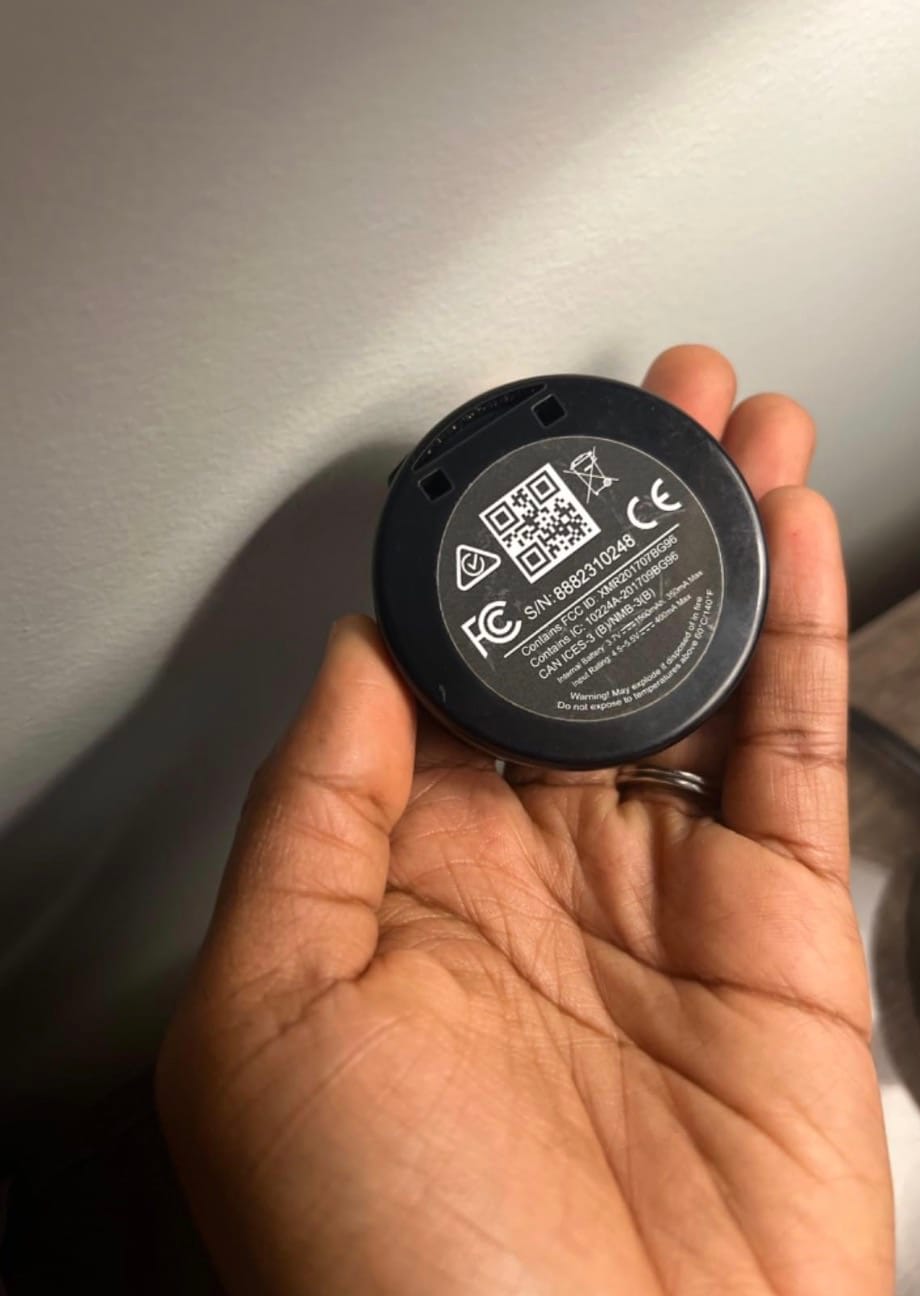
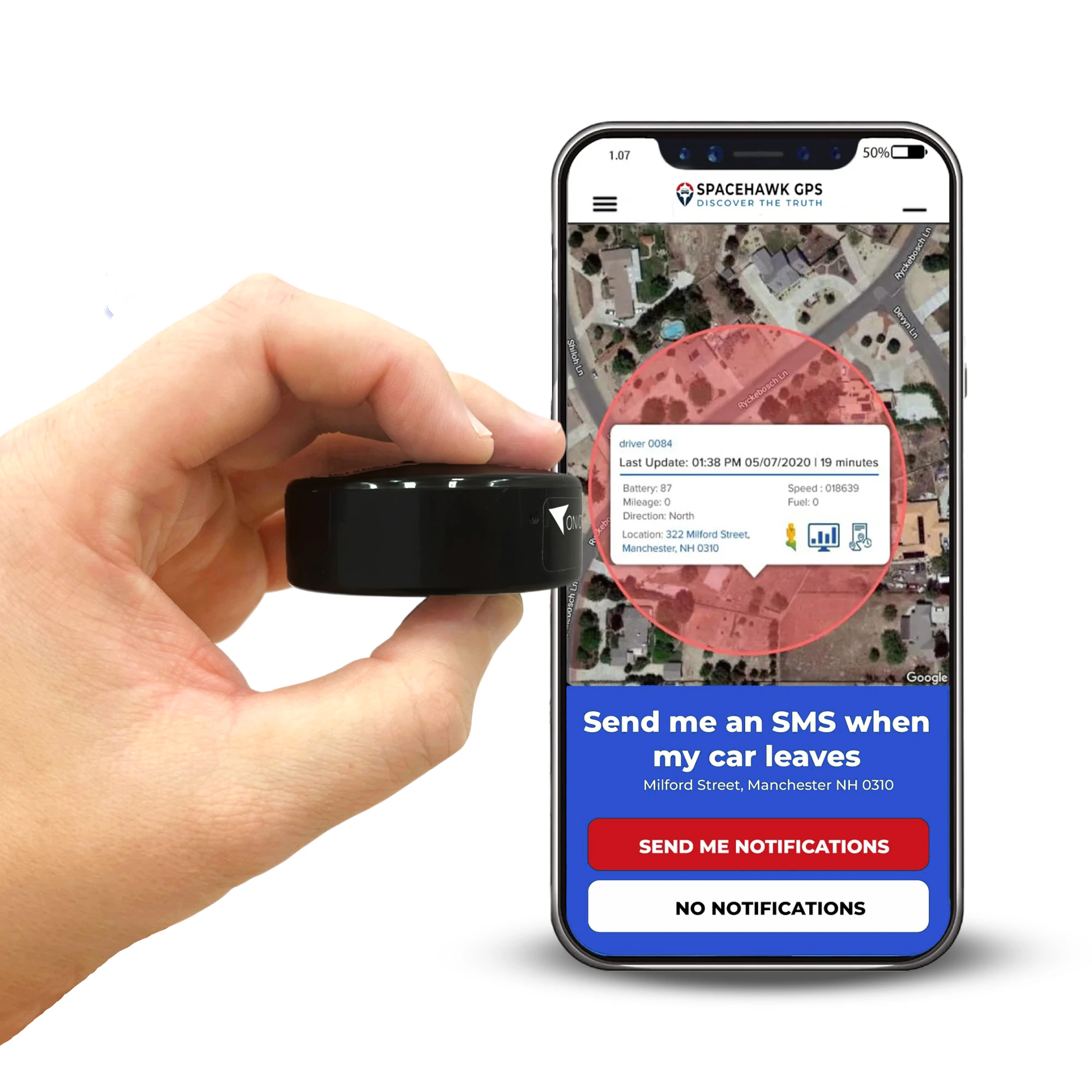
I ran SpaceHawk wireless first, then hardwired it the way I'll walk you through later in this guide. On the 1-minute plan, location data was dead-on accurate for everyday testing, and bumping it to 3-second updates for a "stolen cart" simulation showed the cart's exact path in real time on the app, with no lag and no guesswork. Geofencing alerts fired the moment I rolled past the boundary I'd set.
Choose SpaceHawk if you want the fastest, most discreet way to protect your golf cart investment without anyone, including a thief, ever spotting the device.
2. Spytec Atlas: Best for Detailed Trip History and Multi-Cart Fleets
Spytec's Atlas line runs on the Hapn platform now, and honestly, the app upgrade alone makes it worth a look if you're managing more than one cart. You get adjustable refresh rates from 5 seconds up to 60 seconds, so you can trade battery life for speed depending on the day.
Where SpaceHawk wins on raw speed, Atlas wins on depth. Trip history, multiple geofence zones, and region-based notifications give fleet operators more to work with than a simple "here's the dot on the map" view.
What I found great during testing in Spytech Atlas:
- Updates as fast as every 5 seconds on the top tier
- Comes with a magnetic, weatherproof case out of the box
- Coverage across 185 countries through the Hapn network
- Strong app experience with detailed trip playback
- Battery runs roughly 13-14 days at slower update intervals
- Good fit for tracking several carts under one account
- Battery drops to around 9 days if you keep it on the fastest setting
- Monthly plans run a bit higher than budget options, starting near $24.95
- Bigger case sacrifices some of SpaceHawk's stealth advantage

I left this one on a cart parked under heavy tree cover for three days straight, switching between update speeds to see how much it actually worked. Slower settings sipped the battery and still reported within a tight radius. Bump it to 5-second updates, though, and you'll want to keep a charger handy, since that's the trade-off you make for that level of detail.
Choose Spytec Atlas if you're managing multiple carts and want trip-level detail, not just a current location pin.
3. LandAirSea 54: Best Budget Pick for Reliable Outdoor Tracking
The LandAirSea 54 is the one I recommend most often to people watching their budget. LAS 54 is a puck-sized, IP67-rated tracker with a strong built-in magnet, and unlike SpaceHawk or Atlas, its subscription plans start lower, as little as $9.95/month on an annual plan.
LandAirSea 54 also offers 3-second location updates like SpaceHawk, making it a strong option for golf course owners who want fast, reliable tracking without stepping into premium-priced territory.
Here's what held up under testing:
- Fully waterproof and dustproof, IP67 rated with no exceptions
- 1,500 mAh battery, lasting 1-3 weeks active, 3+ months in energy-save mode
- Accuracy within roughly 6 feet & 3 second updates
- Coverage in 155+ countries
- Lowest entry-level subscription cost on this list
- Genuinely rugged, built for sitting outside year-round
- Simple barcode activation, no complicated setup
- Update speed is slower than SpaceHawk on comparable plans
- Magnet mount only works on metal surfaces
- Faster update plans cost more, narrowing the budget advantage

I left the LandAirSea 54 outside through a stretch of rain and humidity that would've fogged up a lesser device. No issues. LandAir Sea 54 picked up location within a few feet every time I checked, and the geofence alert fired right when the cart crossed the line I'd drawn. Not flashy, just reliable, which is exactly what most cart owners actually need.
Choose LandAirSea 54 if you're looking for a dependable GPS tracker that performs well in all weather conditions without the premium price tag.
4. Optimus 3.0: Best for Simple Geofencing on Course or Fleet Carts
The Optimus 3.0 keeps things simple and it is a lightweight 4G LTE tracker with a clean app interface, and where the Atlas leans into detailed reporting, Optimus leans into ease of use, which course managers juggling a whole fleet of carts tend to appreciate.
Geofencing alerts notify you the moment a cart leaves a designated area, and the Optimus 3.0 makes setting that boundary genuinely easy, just a few taps and done.
What great feature worked during testing:
- Updates as frequently as every 10 seconds when you need them
- Twin magnets strong enough to hold through rough terrain
- Waterproof housing for outdoor storage
- Email and text alerts for movement, speeding, and low battery
- Battery lasts over a month at the default 1-minute update setting
- One of the more affordable devices in this lineup
- 1 year of historical location data included
- Fewer advanced features than Atlas for multi-cart fleets
- Some retailers list slightly different specs, so confirm the listing before buying

I set this one up on a course-managed cart with a tight geofence around the cart barn. Spytech caught every single boundary crossing I tested, no missed alerts, no delay worth mentioning. If your priority is "tell me the moment this leaves where it's supposed to be" without digging through a complicated dashboard, this one does the job without fuss.
Choose Optimus 3.0 if you manage a fleet and want straightforward geofencing without a steep learning curve.
5. Tracki Pro: Best for Seasonal Storage and Long Stretches Between Charges
The Tracki Pro is the one I'd put on a cart that sits in storage for the off-season. Tracki Pro packs a 10,000 mAh battery into an IP67-rated body, and where SpaceHawk and Atlas trade battery life for speed, Tracki Pro flips that entirely, since it's built to go months without a charge.
Tracki Pro also adds Wi-Fi-assisted positioning, which helps in garages and storage barns where straight GPS signal can get spotty.
Testing highlights:
- Up to 60 days battery life in normal use
- Stretches to 200+ days in battery-save mode
- Works across 180+ countries via GPS, GLONASS, BDS, LTE, and Wi-Fi positioning
- Built-in magnet plus an optional screw mount for permanent installs
- Longest standby battery life on this entire list
- Subscription plans start as low as $9.95/month on long-term plans
- Rugged build holds up to rough storage conditions
- Larger and heavier than SpaceHawk or LandAirSea, so it's harder to hide
- Battery life drops noticeably if you keep update frequency high

I shelved this one in a closed storage shed for several weeks without touching it, then checked back in. Battery still had plenty left, and it picked up a signal almost immediately once I moved it back outside. For a cart that hibernates half the year, that kind of patience is worth more than a faster refresh rate you'll never use while it's parked.
Choose Tracki Pro if your cart sits in storage for long stretches and you don't want to think about recharging it every other week.
How Do You Install a GPS Tracker on a Golf Cart?
Installation depends on whether you're going wireless or hardwired. Wireless is the fast option: activate the device, mount it, and you're done in a couple of minutes. Hardwiring takes a little more effort but means you never worry about a dead battery.
If you do hardwire, here's the short version of the process I use:
Whichever route you choose, take the two minutes to test the geofence alert and confirm the app is reporting location correctly before you call the install done. A tracker that's "probably working" isn't worth much in an actual theft situation.
Whether you're going wireless or hardwired on your golf cart, the same core installation principles apply to any vehicle. Get the full step-by-step walkthrough with wiring tips, placement guidance, and activation checks.
How to Install a GPS Tracker | Expert DIY GuideHow Do You Choose the Right Golf Cart GPS Tracker?
Start with how the cart is actually used. A cart driven daily at a course needs different things than one that sits in a garage from October through March.

Are You Tracking for Theft Prevention or Course Management?
If theft prevention is the goal, prioritize speed and stealth, since SpaceHawk's 3-second updates and invisible mount exist for exactly this. If you're managing a fleet across an 18-hole course, Optimus 3.0 or Spytec Atlas give you geofencing and reporting tools built for multiple carts at once.
How Often Is the Cart Actually Driven?
Daily drivers need a tracker you're comfortable recharging weekly. Seasonal carts are where Tracki Pro's long standby time earns its keep, since nobody wants to remember a GPS tracker mid-winter.
What's Your Budget for the Device Plus the Subscription?
Don't just compare sticker prices. Factor in the monthly plan too. LandAirSea 54 and Tracki Pro both offer entry plans under $10/month, while SpaceHawk and Atlas sit a bit higher in exchange for faster updates and deeper reporting.
Do Physical Deterrents Still Reduce Theft Risk ?
Yes, steering wheel locks, pedal locks, keypad locks, and wheel locks all complement a tracking system. They won't recover a stolen cart on their own, but they buy time, and a GPS tracker tells you exactly where the cart went if a thief gets past them anyway.
Here's the question I'd ask myself, would you rather pay under $20 a month to know exactly where your cart is, or spend a weekend explaining to a course manager, an HOA board, or your own family why it just vanished? I'll let you answer that one.

Since golf carts operate outdoors year-round and are exposed to rain, morning dew, and course irrigation, waterproof rating is one of the most important specs to check before buying. See which GPS trackers made our tested shortlist.
Best Waterproof GPS Trackers: Tested & RankedConclusion: Which Golf Cart Tracker Should You Buy?
There's no single best gps tracker for golf cart that fits everyone, since it depends on whether you want maximum stealth, deep reporting, a tight budget, simple fleet management, or a tracker you can forget about for months.
For most owners chasing the best mix of speed, discretion, and reliability, SpaceHawk Mini is where I'd start, since it's the fastest tracker here and the easiest to hide. If you're running multiple carts, Spytec Atlas or Optimus 3.0 give you the fleet tools you need. Watching your budget closely? LandAirSea 54 delivers real protection without the premium price. And if your cart spends half the year in storage, Tracki Pro will outlast almost anything else on this list.
Golf cart theft isn't going away, and industry estimates and golf-cart security guides commonly put US thefts well into the tens of thousands each year, with most carts never recovered. Whichever tracker you choose, getting one installed today beats finding out the hard way that you needed one yesterday.

 Buy on Amazon