


How to Optimize Delivery Routes with GPS Tracking
Key Takeaways
-
01 GPS route optimization trims fuel spend and lifts on-time delivery rates across a fleet.
-
02 Manual route planning leaves drivers stuck in traffic with no live data and no way to reroute.
-
03 Live GPS data supports rerouting on the fly and cuts the fuel lost to backtracking and idling.
-
04 Konnect and SpaceHawk Mini give delivery fleets real-time location, trip history, and instant alerts.
-
05 Hardware alone changes nothing. The savings show up when the data is paired with driver coaching.
How to Optimize Delivery Routes With GPS Tracking
7:40 a.m. Your lead van is stuck behind a closed lane, and now you need to optimize delivery routes for the whole day from one phone call.
I'm Ryan Horban, and for the last 15 years I've worked with GPS vehicle trackers and commercial fleet tracking systems. Route planning is where most delivery operations quietly lose money. Running deliveries without a plan is expensive, because every extra mile burns fuel and every late stop risks a bad review and a difficult phone call.
GPS route optimization gives a fleet three things manual planning cannot match: live visibility, rerouting while a driver is still moving, and a record of what actually happened on every job. Below, you'll see where the savings come from, what two government field studies say about fuel, and how to choose a tracker for a delivery fleet that runs vans daily.
Fleet Pick
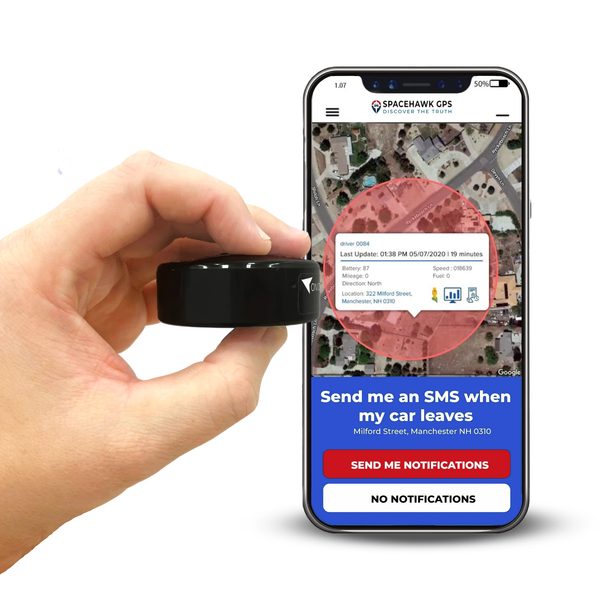
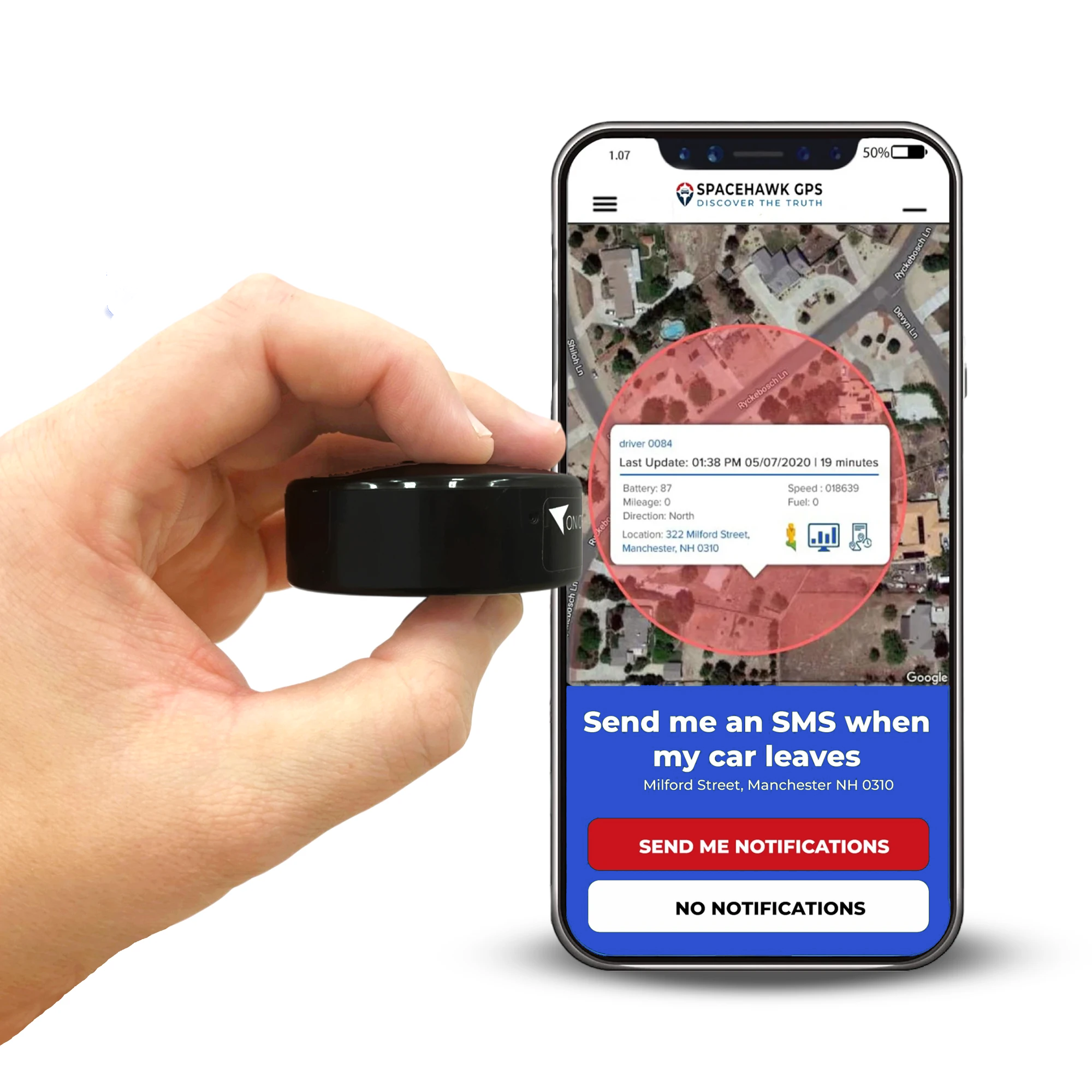
SpaceHawk Mini GPS Tracker
Live location on every van without a wiring job. Magnetic mount, quick to move between vehicles, and sized for fleets that grow one truck at a time.
In Short: Ryan Horban, GPS tracking expert at Fleet1st, says delivery route optimization works when live GPS data is paired with driver coaching. Konnect puts every van on the map at $199.95 with a year of service included, and SpaceHawk Mini covers hidden and portable placement at $39.95, currently on offer at $1.95. Government field studies support about 12 percent fuel savings, not the bigger numbers some vendors quote.
Six topics follow, in the order a fleet owner needs them:
- The definition of route optimization, and where live data changes the job
- Where the savings come from: fuel, on-time rates, driver workload, and customer trust
- Features that earn their cost, from real-time tracking to stored history
- What the research shows, including the caveat both studies landed on
- Advanced strategies: vehicle routing problems, last-mile costs, and eco routing
- Choosing a system, plus OBD against hardwired
Each section stands on its own, so jump to the one your fleet needs first.
What Delivery Route Optimization Actually Means
Route optimization sounds technical, and the idea underneath is simple: get from one stop to the next without wasting time, fuel, or a driver's patience.
Traditional planning asks a dispatcher to juggle traffic reports, delivery windows, and a fair amount of guesswork. With a fleet GPS tracking system, position data replaces the guesswork and updates while the day is still running.
Route optimization
Choosing the order and path of a day's stops. The goal is the fewest miles with every window still met.
Live data matters most when something goes wrong, because a static route sheet has no answer for a closed lane and a live one does.
Better systems also learn. Stored trip history shows which corridors slow down, which stops run long, and which routes were optimistic on paper. Route optimization is not about shaving a few minutes, and the point is a schedule that survives contact with a real Tuesday.
Where the Savings Actually Come From
One driver ends the day buried in stops while another finishes at two o'clock.
Planning routes by hand rarely produces a fair result, because nobody can see the whole map at once or compare today's stops against yesterday's. Below are the four places GPS data changes the arithmetic.
Faster Deliveries and On-Time Performance
Manual planning leaves drivers stuck with no way around a jam. GPS systems pull in live traffic and let dispatch reroute in minutes. Fewer late arrivals follow, and so do fewer apology calls.
Three results show up first:
- Known bottlenecks get avoided before they turn into missed windows
- Drivers stay on the road instead of on the phone with dispatch
- Customers get a delivery experience that behaves predictably
On-time rate is the number customers feel first.
Lower Fuel Costs and Cleaner Operations
Guesswork routes waste fuel, and trimming detours and backtracking is the most direct saving available and the easiest one to measure.
Idling is the quieter problem. The Caltrans Division of Research ran a fleet pilot and reported in its FIDAS final report that idling accounted for about 13 percent of the fuel used, while speeding above 80 mph accounted for about 1 percent. Analysis covered 165 vehicles, out of a 200-vehicle contract.
Four habits turn that finding into savings:
- Cut unnecessary mileage across the fleet, which lowers total fuel burn
- Track idle time and find the stops where engines sit running
- Plan fuel stops that sit on the route rather than off it
- Report measurable emission reductions against a sustainability target
Each one is measurable within a month, which is why fuel is where most owners see proof first.
Better Driver Productivity

Balanced routes are a retention tool as much as a fuel tool. Drivers notice an unfair schedule long before a manager does, and nothing wears them down faster than a route that makes no sense.
Optimized routing spreads the work more evenly, because stops get assigned by position instead of by memory. Two payoffs follow:
- Lower burnout, because stops get distributed evenly across the shift
- Better retention, because drivers can plan a life around the schedule
Drivers who stay are drivers you do not have to retrain.
Customer Satisfaction and SLA Compliance
Customers want predictable delivery more than fast delivery. Accurate arrival estimates do more for trust than an aggressive promise does, and for any business tied to a service level agreement, that accuracy is the whole contract.
- Give customers arrival windows the fleet can actually hold
- Send an update the moment a delay becomes likely
- Protect SLA compliance rates and avoid the penalties attached
- Build a reputation as the supplier that turns up when promised
- Cut repeat calls from customers asking where the driver is
Each of those promises only holds when dispatch sees a delay early.
Core Features That Earn Their Cost
Tracking platforms are more than a dot moving across a screen, and the right system becomes the spine of the operation. Spreadsheets and phone calls give way to a single view.
Real-Time Tracking and Dynamic Adjustments
Accidents, closures, and sudden weather are what wreck a delivery schedule. Real-time fleet tracking keeps dispatch a step ahead of all three.
Worked example
One truck sits behind a lane closure after a multi-car collision shuts half the highway. Without live data, the driver waits and the rest of the day slides. With live data, dispatch sees the slowdown, sends an alternate route, and reorders the remaining stops, and the customer never learns there was a problem.
Reacting in minutes rather than hours turns a lost afternoon into a footnote.
Smarter Dispatching and Order Allocation
Manual dispatching rarely lands fair: one driver drowns in stops while another cruises with half a load. GPS-backed dispatching shows where every vehicle is and how much room is left in it, so jobs get assigned on facts rather than on who answered the radio first.
Related reading: what fleet GPS tracking costs per vehicle, and how the cost offsets against fuel savings.
Fleet GPS Tracking CostVehicle and Cargo Security
Losing a vehicle, or a loaded trailer, is the scenario every fleet manager plans around. Geofencing, speed alerts, and live position give you a working safety net.
Cargo monitoring matters just as much in some sectors. Cold-chain fleets can watch whether a refrigeration unit is holding temperature, which takes dedicated sensors beyond a GPS tracker, and a dip triggers an alert before the load is written off.
Stored History and Forward Planning
Planning on instinct works until the holiday rush arrives. Stored trip data is what replaces instinct with a pattern.
Fleets that review last season's delivery data can rebalance territories before orders pile up, and extra drivers get scheduled in advance rather than in a panic. Better planning tends to show up directly in the overtime line.
What the Research Actually Shows
How much fuel does GPS tracking really save? Vendor claims run wide and mostly trace back to nobody in particular, so start with two government field studies that landed on the same uncomfortable caveat.
Caltrans fleet pilot: idling is the target, not speeding
- Idling accounted for about 13 percent of fuel used
- Speeding above 80 mph accounted for about 1 percent
- Eliminating 85 percent of both was judged realistic, worth about 12 percent of fuel
What it did not settle: the report says installing devices does not by itself change driver behavior on idling or speeding without coaching.
U.S. DOT, 46 Class 8 trucks: coaching moves the number
- Pilot groups started with a baseline period, then got in-cab feedback, coaching, and incentives
- Unsafe events dropped by more than half
- Fuel economy improved by 5 percent for sleeper-cab drivers and 9 percent for day-cab drivers
What it did not settle: the brief reports the full change from baseline to incentives, so it cannot separate the tracker from the coaching program. Full text: U.S. DOT technology brief.
Read together, those two results give a fleet owner a fair expectation. Somewhere near 12 percent on fuel is achievable, and buying the hardware while skipping the conversation with drivers is not how you get there. Video helps that conversation, and our guide to a dash camera with GPS tracker shows how footage and route data work together.
You cannot coach an idling habit you cannot see. SpaceHawk Mini logs the route and the stops on every vehicle.
See SpaceHawk MiniAdvanced Route Optimization Strategies

Once a fleet passes a dozen vehicles, route planning stops being a scheduling job and becomes a math problem. Basic tracking handles the daily work, and fleets that want more have four levers worth understanding.
- The vehicle routing problem: many trucks, many stops, many time windows at once
- Last-mile efficiency: the final stretch to the door
- Pattern learning: stored history that predicts slowdowns a route sheet cannot
- Eco routing: fewer wasted miles and less idle time
Each lever gets its own section below.
Tackling the Vehicle Routing Problem
Vehicle routing problem (VRP)
The logistics puzzle of assigning many stops to many vehicles at the lowest total cost. Load limits and delivery windows both constrain the answer.
Planning the fastest path for 20 trucks is a good example, because each has a different load, a different time window, and a different set of destinations. One wrong assignment early and the whole afternoon runs late. Software solves this by testing far more combinations than a person can, weighing traffic patterns, delivery windows, driver hours, and vehicle capacity all at once.
During peak season, automated routing shortens average routes and reduces missed windows, and the gain comes from recalculation, not from cleverness.
Last-Mile Delivery Optimization
One stage keeps managers awake, and it is the last one. The final run from warehouse to doorstep consumes time and money out of all proportion to its distance.
Live data takes a bite out of that number. Rerouting steers around delays, territory balancing removes wasted miles, and stored history stops two vans crossing the same street twice.
Learning From Historical Patterns
Tracking alone is reactive. Pattern analysis is what makes planning proactive.
Given enough stored trips, the slowdowns become predictable. Traffic near a stadium spikes on game days, and a downtown corridor crawls every Friday afternoon. Neither fact is a surprise, but neither shows up on a static route sheet either.
Eco-Friendly Route Optimization
Every wasted mile is money and carbon at the same time, so one change pays twice.
Fleets under pressure to report emissions get both results because trimming mileage and idle time shrinks the fuel bill and the footprint together. Many now fold those figures straight into sustainability reporting, and eco routing is one of the rare changes where the accounting case and the environmental case agree.
Choosing the Best GPS System for Your Delivery Fleet
Systems are not interchangeable, and the wrong one creates work instead of removing it. Weigh these five factors before you buy:
- Ease of use: dispatchers need a dashboard they can read at a glance, and drivers need an app that adds no task behind the wheel
- Integrations: look for a system that connects to the dispatch, fuel, and invoicing tools you already run, because every double entry is a future error
- Scalability: a platform that suits five vehicles should still suit fifty, so check how pricing behaves as the fleet grows
- Customer notifications: automatic arrival updates save the office a round of phone calls on every delayed job
- Support: look for US-based help you can call, and note that Konnect and SpaceHawk Mini both include free tech support for the life of the device
The right system is the one your dispatchers will actually open every morning.
OBD Against Hardwired GPS

OBD units plug into the diagnostic port under the dash, while hardwired units tie into the vehicle loom and stay out of sight. Most growing fleets start on OBD, and hardwired systems make more sense once scale and security matter more than flexibility.
OBD plug-in tracker: pros
- Installs in seconds through the OBD-II port
- Moves between vehicles without any rewiring
- Can read engine data the port already exposes
OBD plug-in tracker: cons
- Visible under the dash and simple to unplug
- Port location varies, so fit is not always tidy
Hardwired tracker: pros
- Hidden in the loom and far harder to disable
- Draws power continuously with no battery to manage
- Usually carries the fuller feature set
Hardwired tracker: cons
- Needs an installer, which adds cost per vehicle
- Awkward to move if you rotate vehicles often
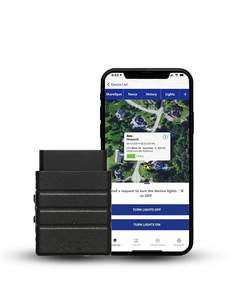
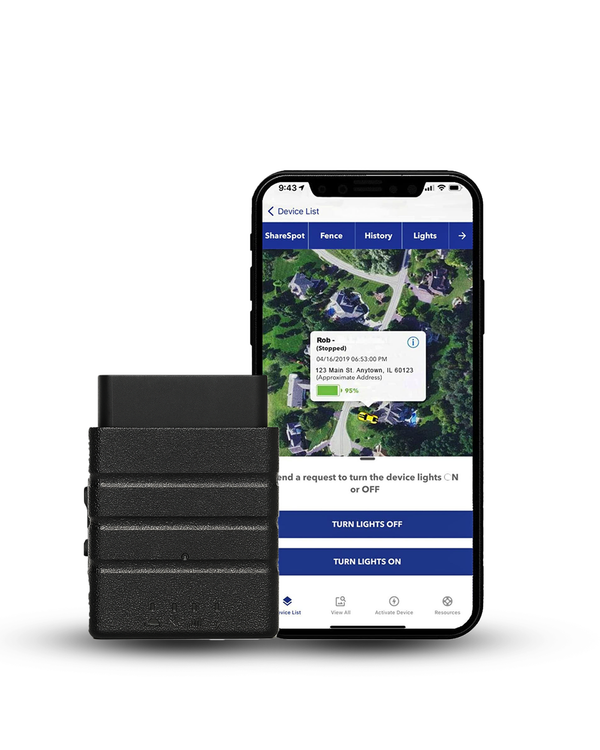
For delivery vans, Konnect is the plug-in pick: 3-second updates, tamper alerts, geofence and speed alerts, and a full year of service inside the $199.95 price. Cars and vans with a port are the target, and it moves between vehicles as fast as it goes in.
Magnetic units sit between the two. SpaceHawk Mini needs no port and no wiring, and it moves to whichever vehicle or trailer is working that week. If your trucks must log Hours of Service, you also need an ELD, and Konnect runs alongside one for fast location. Our guide explains what an ELD is.
Driving Toward On-Time, Cost-Efficient Deliveries
Smarter routes lead to steadier businesses, but only when somebody acts on what the tracker shows. Late deliveries cost trust, rising fuel costs shrink margin, and overloaded drivers leave. Route optimization pushes on all three at once.
Konnect puts every van on the map every 3 seconds for $199.95, with a full year of service included, and it runs alongside your ELD. SpaceHawk Mini covers trailers and hidden placement at $39.95, currently on offer at $1.95. The honest version of the pitch is narrower than most vendors make it, because live data will not fix a fleet by itself. Pair either tracker with an idling policy and a real conversation with your drivers, and roughly 12 percent of the fuel bill is in play.
After 15 years working with delivery fleets, I've noticed the vans that improve are the ones whose owners review the map every Monday morning and tell their drivers what the data is for.
Start with the data, then change the habits.
Put Live Location on Every Delivery Vehicle
Every Fleet Is Different. Find the Right Tracker.
See All GPS Tracking Solutions from Fleet1stSources
- Caltrans Division of Research, Innovation and System Information, Fleet In-Vehicle Data Acquisition System (FIDAS) final report, CA16-2516, 2015.
- U.S. Department of Transportation, Study of the Impact of a Telematics System on Safe and Fuel-Efficient Driving in Trucks, technology brief, 2014.
- Statista, Last-mile share of total shipping costs worldwide, 2023.
Some images in this article were generated using AI.

 Buy on Amazon